Hair Removal
There are many different ways of removing hair (shaving, plucking, waxing, threading, etc.)
They all give quick results, but the results are only temporary – so you will have to repeat them, again and again.
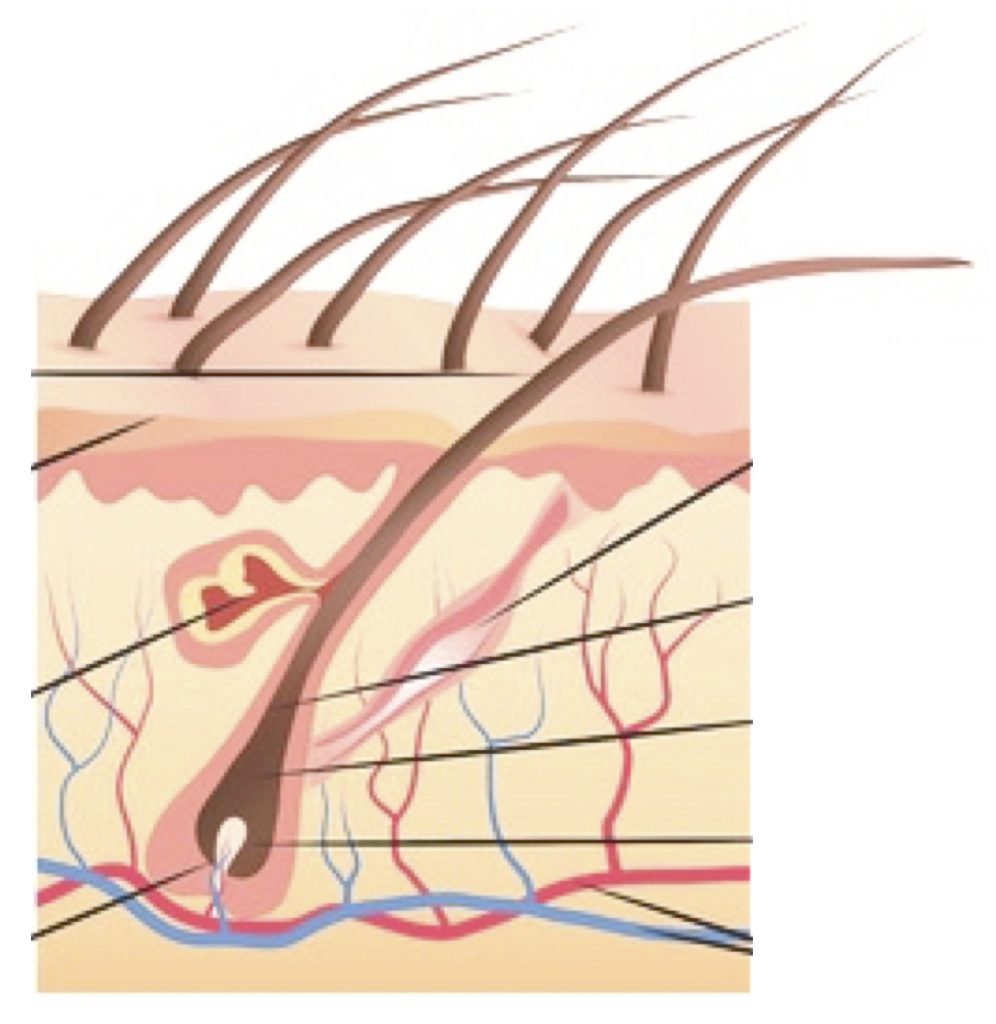
This is because an unwanted hair is the result of something else: an unwanted follicle. Tweezing a hair gets rid of it right away, but a replacement hair will eventually show up – so unless we deal with the follicle, it will just continue to create new hairs.
Electrolysis is the only permanent solution to that problem.
Electrolysis has been the gold standard of permanent hair removal for over 150 years. It was developed in 1875 by Missouri opthalmologist Dr. Charles Michel, and allowed him to successfully treat patients with ingrown eyelashes (which often led to infections and vision problems).
The Food and Drug Administration and the American Medical Association recognize electrolysis as the only scientifically proven method of permanent hair removal. Physicians often make referrals to electrologists for patients who are troubled by unwanted hair.
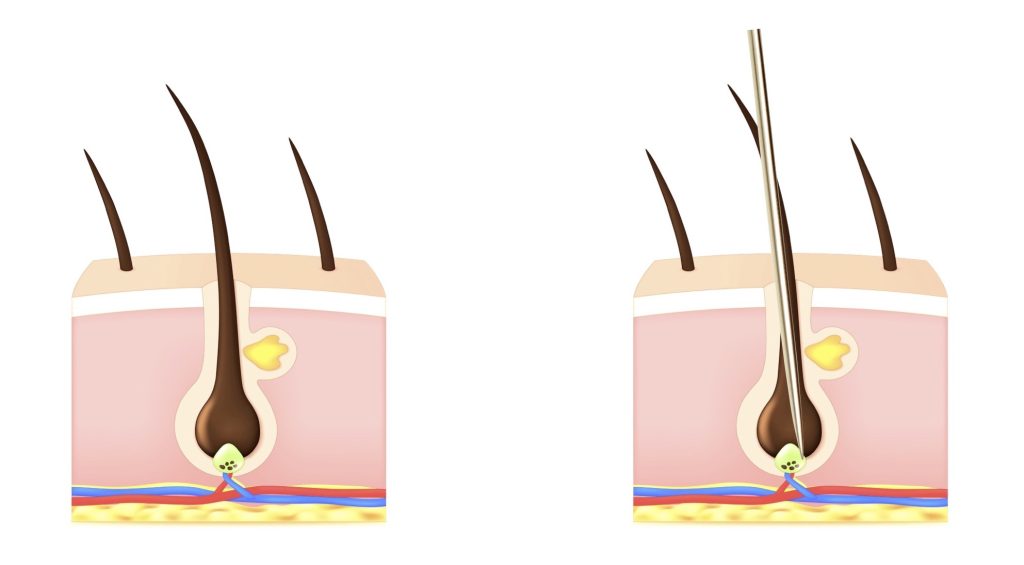
During the treatment, a very slender probe is gently inserted into the follicle. Because the follicle is a natural inward extension of the skin’s surface, the probe does not pierce the skin. A small current is applied, creating thermal and/or chemical changes that destroy the lower portion of follicle. The hair is then removed with tweezers, and we go on to the next follicle. This is one reason why the process is so time-consuming: because each follicle must be treated individually.
After the treatment, it is normal for the skin to be slightly reddened and irritated. This usually clears up within a fairly short period of time, but can sometimes last longer, depending on skin sensitivity and the amount of hair removed. Be gentle when washing – don’t scrub – and take the time to apply a soothing lotion. Sensitive individuals may want to keep from touching the treated area, to avoid irritating the skin.
In order for us to treat all the unwanted follicles in any given area, we need to work with Nature’s timetable. In most cases, this usually takes about 12-18 months. But most people will start to see a difference long before then. This is because at each appointment, we are reducing the total number of unwanted follicles – and as that pool gets smaller, there won’t be as much new growth coming in.
At any one point in time, most follicles are dormant , which means that only a small number of them are actively hosting a hair. And because the follicle cycles are staggered, new growth is continually coming in – this is why we need to do a series of treatments over a period of time.
In order to treat a follicle with electrolysis, there has to a hair growing out of it at the time of the appointment. The hair is like a golfing flagstick, telling us exactly where the follicle is.

The most efficient way to do electrolysis is to 1) get the area clear of unwanted hair, as soon as possible (client leaves appointment with all visible hairs removed), and 2) maintain a treatment schedule that keeps up with the new growth.
For example: let’s say a client comes in with patches of coarse, dense hair on her chin and jawline. If there is too much growth for us to get in one session, we will split it up into a series of appointments (e.g., 4) about 1-2 weeks apart, so that by end of the last appointment, client is walking out the door with no unwanted hair above the skin. At that point, we start to schedule out according to how much and how quickly new growth comes in.
As you continue to make progress, your sessions will start to get shorter and spaced farther apart.
The more growth there is to begin with, the longer it’s going to take to get to the intial “all clear” point, and it will push the 12-18 month estimate out accordingly.
Most follicles (80-90%) are eliminated the first time they are treated, and will never produce another hair. The remaining 10-20% may produce another hair (weeks to months later), but this regrowth will be much thinner than the original.
When you start seeing new hairs coming in shortly after your treatment, keep in mind that they are not from the same follicles that were just treated. Because they are so tiny and close together, it’s easy to mistake one for its neighbor, even if it looks like the new hairs are in exactly the same spots. The growth you see coming in after a treatment will be new growth (from follicles that have not yet been treated.)
There’s no need to worry if you go a long time between appointments, or are unable to schedule often enough to keep up with the new growth. You won’t lose the ground you’ve already made – the total amount of electrolysis you do will be the same, it will just be spread out over a longer period of time.
It’s important to remember that electrolysis treats only the symptoms (unwanted hair growth), but it can’t do anything about the cause of the growth (heredity, hormones, etc.).
If the cause is ongoing, it can keep recruiting additional follicles to produce even more unwanted hair.
Electrolysis is effective on the follicles we treat, but it can’t prevent new ones from being added to the pool. It’s like bailing water out of a boat that still has a hole in the bottom – you are scooping it out, but new water keeps coming in.