Hair Growth
Hair Growth Cycles
Hair grows out of follicles, which are permanent little structures in the skin. They are like individual “apartment units” that will host a series of temporary “tenant” hairs throughout a person’s life. A hair “moves in,” lives there for a period of time, then eventually “moves out” (falls out of the follicle).
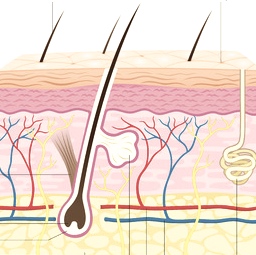
Each follicle goes through this process independently – which means that at any given moment, some apartments are occupied, others have tenants getting ready to move out, and the rest are vacant and waiting for their next resident.
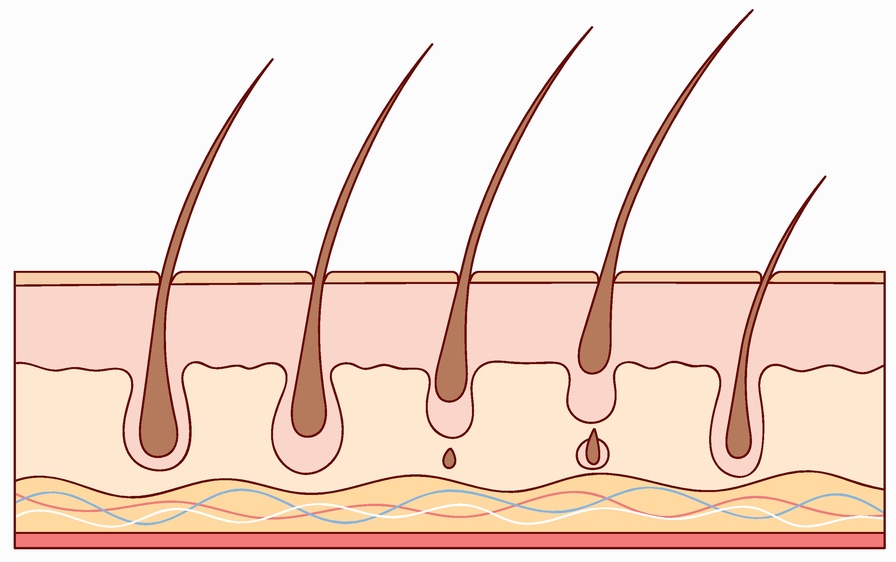
Because the timing of these cycles is staggered across the follicles, there is a constant turnover – old hairs falling out, new ones coming in – and it’s so gradual that we don’t really notice it happening. On most parts of the body, most of the follicles are dormant – this means that for every one hair you see above the skin, there are many more waiting for their turns to show up.
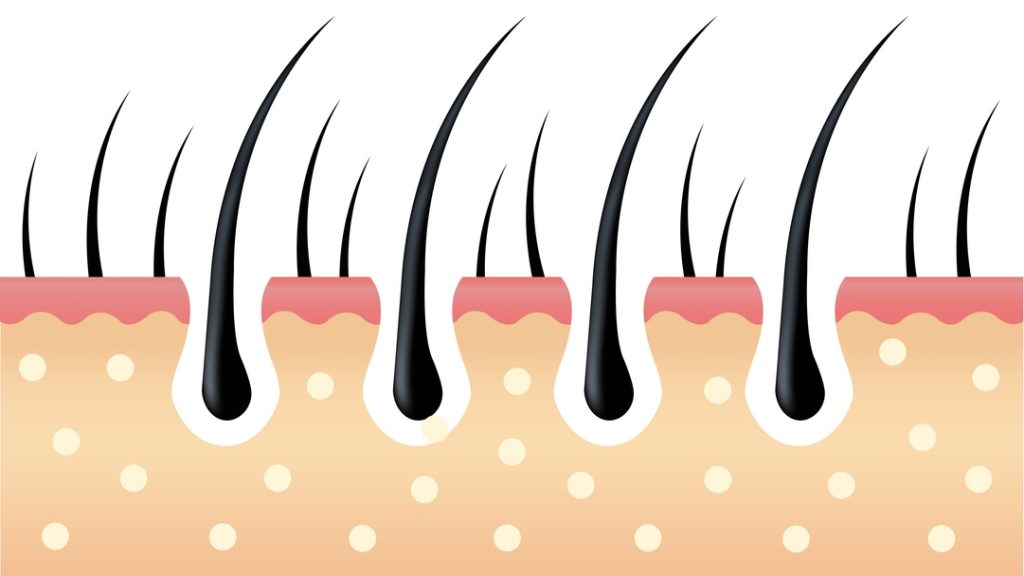
There are two main types of hair: Vellus is fine, downy hair (“peach fuzz”) that starts to grow in childhood. Terminal hair is significantly thicker, and usually darker (eyebrows, eyelashes, underarms, pubic area). There is also accelerated vellus, which is longer and a little thicker. These different types of hair are often found growing side-by-side and interspersed with one another.
Hormones
Estrogens (female) and androgens (male) are two powerful groups of hormones that play important roles in normal sexual development and reproduction, as well as overall health. They are present in both sexes, but in different amounts.
In women, estrogens are produced by the ovaries, adipose cells, and adrenal glands; androgens are produced by the ovaries and adrenals.
In men, androgens are produced by the testes and adrenal glands; estrogens are produced by the testes and adipose cells.
During puberty, higher androgens cause many changes in both sexes, including the conversion of vellus hairs to terminal hairs in the pubic area, underarms, and legs. Boys also get terminal hair in the “male-pattern” areas: face, chest, abdomen, and back. For a majority of women, the peach fuzz on the face and other areas continues throughout adulthood.
Unwanted Hair Growth
Most of our hair growth is completely normal, but some of it is still unwanted (e.g., legs, underarms, bikini line, eyebrows, back).
Heredity, hormones, medications, and stress can all play significant roles in causing hair growth.
Heredity is often a factor in hair growth. In general, if members of your family have unwanted hair, the odds are likely that you will, too. The follicles themselves are naturally more sensitive, even to normal hormonal levels. For certain populations (e.g., Mediterranean, South Asian, Middle-Eastern), higher levels of hair growth is considered normal.
Hormonal changes are often responsible for unwanted hair. As some men get older, they may develop growth on the ears, nose, and back. For women, unwanted growth often shows up at menopause, and sometimes even during pregnancy. In some women, excess hair could be due to an underlying medical condition, and may be worth evaluating by a trusted physician.
About 10% of women will develop hirsutism, which is coarser hair growth in the male-pattern areas. Most hirsutism (~85%) is due to elevated androgens. The most common cause (~75%) of high androgens is PCOS (Polycystic ovarian syndrome). It can start as early as adolescence, and some of its symptoms include excess androgens, menstrual irregularities, infertility, acne, insulin resistance, hair growth and obesity.
Increased androgen production can also be caused by problems with the thyroid, pituitary, adrenals, pancreas, and ovaries (such as Cushing’s Syndrome and Congenital Adrenal Hyperplasia). Some medications (spironolactone, Vaniqua, and various estrogen/progesterone formulations) can help slow down hair growth, but may also have side effects.
Medications such as cyclosporin, dilantin, minoxidil, DHEA, danizil, cortisol, some contraceptives, and some antidepressants can affect hormonal balance, and increase hair growth.
Stress (emotional and physical) often leads to all kinds of additional problems in this life, including hormonal changes, and even menstrual irregularities in women.
Irritation to the skin can cause “protective” hair growth – e.g., wearing a cast or splint, injuries that lead to scarring, severe sunburns, and even prolonged and extensive waxing. Because irritation causes an increase in the blood supply to the skin and hair follicles, it can also stimulate new hair growth.